
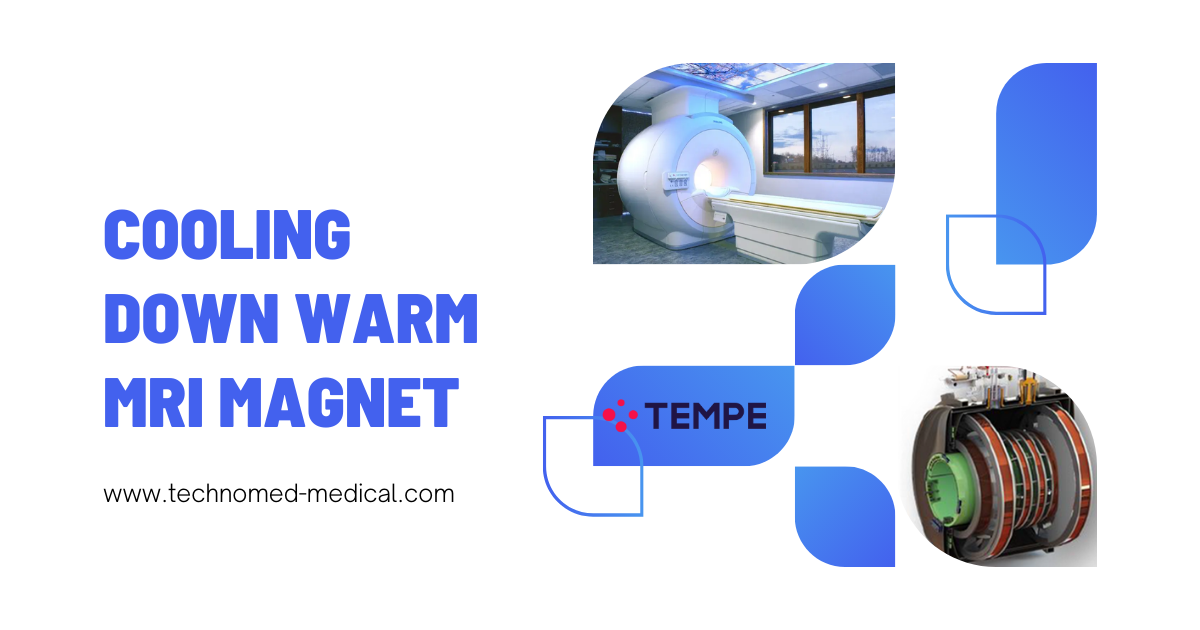
The Advantages of Cooling a Warm MRI Magnet
A warm superconducting MRI magnet is not automatically a lost asset. In some cases, a system that has warmed during storage, relocation, prolonged shutdown, or a cooling-system problem may be evaluated for a controlled return to cryogenic operating conditions. The important question is not simply whether the magnet can be cooled, but whether its condition, cryogenic system, service history, and site readiness make recovery technically and economically sensible.
The magnet is no longer at its normal superconducting cryogenic operating condition.
Successful recovery can preserve a usable MRI asset and avoid unnecessary replacement.
Magnet integrity, helium status, cold head, compressor, monitoring, utilities, and service records.
Most conventional high-field MRI scanners use superconducting magnets. These magnets depend on extremely low temperatures so that the magnet windings can carry current with essentially no electrical resistance. Liquid helium and a magnet refrigeration system are commonly used to maintain those conditions.
Cooling a warm MRI magnet is therefore a specialized magnet-service project, not a routine facility maintenance task. A proper evaluation should determine why the magnet warmed, whether the cryostat and cooling system remain suitable for recovery, and what work is required before the scanner can return to service.

What Happens When an MRI Magnet Becomes Warm?
In a superconducting MRI system, the magnet must remain below the critical temperature of its superconducting material. Manufacturer training material from Siemens Healthineers, for example, describes niobium-titanium magnet windings becoming superconducting below approximately 9.8 K, with the cryostat containing liquid helium around 4.2 K.
If a magnet warms above its superconducting operating range, it cannot simply be treated as a scanner that is ready for normal imaging. The magnet and its supporting cryogenic system must first be assessed. Depending on the cause of the warm condition, that evaluation may include the magnet vessel and vacuum condition, helium inventory, cold head, helium compressor, chiller or cooling-water circuit, magnet monitoring, pressure, and system history.
Its value depends on the magnet’s condition, cause of warming, recoverability, completeness of the MRI system, service history, and the cost and risk of returning it to service. A recoverable warm magnet can still represent a valuable asset in the secondary equipment market.
Main Advantages of Cooling a Recoverable Warm MRI Magnet
Preserve an Existing MRI Asset
If the magnet is technically recoverable, cooling it can allow an otherwise useful MRI system to be evaluated for continued operation instead of being written off solely because it is warm.
Improve Equipment Marketability
An MRI that can be demonstrated in an appropriate operating state is generally easier for a buyer to evaluate than a system whose magnet condition and recovery requirements are unknown.
Verify Cryogenic-System Health
A recovery project creates an opportunity to inspect the supporting cooling chain, including the cold head, compressor, helium status, cooling-water or chiller condition, and magnet monitoring.
Support Relocation or Reinstallation Planning
For used MRI equipment, understanding the magnet’s current cryogenic condition helps buyers estimate what is required before transport, installation, ramping, calibration, and acceptance testing.
Cooling, filling, venting, ramping, or recovering an MRI magnet involves cryogenic, pressure, electrical, oxygen-displacement, and strong-magnetic-field hazards. The exact process is manufacturer- and magnet-specific and should be performed only by appropriately trained MRI magnet/cryogenic service personnel using the applicable service procedures. This article is a buyer’s guide, not a cooldown procedure.
How an MRI Magnet Cooling System Works
The cooling system around a superconducting MRI magnet is a chain of components rather than a single refrigeration device. The exact design varies by manufacturer and magnet generation, but the following components are commonly important.
| Component | Role in the cooling system | What a buyer or service evaluator should verify |
|---|---|---|
| Cryostat | Insulated vessel surrounding the superconducting magnet and, in conventional designs, containing the liquid-helium environment. | Magnet model, condition, vacuum/pressure concerns, service history, and any abnormal icing or venting history. |
| Liquid helium | Provides the cryogenic environment needed by many conventional superconducting MRI magnets. | Helium level or inventory, refill history, loss events, and manufacturer minimum requirements for the specific magnet. |
| Cold head | The refrigeration component at the magnet that removes heat from the cryogenic system. | Correct model, operating condition, maintenance history, noise/vibration concerns, and compatibility. |
| Helium compressor | Supplies high-pressure helium gas to the cold head and recompresses the returning gas as part of the refrigeration cycle. | Correct compressor model, hours/service status, gas pressure, power requirements, cooling requirements, and matching cold head. |
| Chiller / cooling-water circuit | Removes heat from water-cooled compressor systems where applicable. | Flow, temperature, water quality, alarms, leaks, facility connection, and manufacturer requirements. |
| Magnet monitoring | Tracks parameters that can indicate magnet or cooling-system problems. | Helium level, magnet pressure, cold-head status, compressor status, temperature, chiller function, and alarm history where supported. |
Cold Heads and Helium Compressors
The MRI cold head and helium compressor work together as part of the magnet refrigeration system. GE HealthCare describes the compressor as supplying high-pressure helium gas to the cold head and recompressing the returning helium gas. Philips documentation similarly refers to the magnet refrigeration system as the “cold head and cryo-compressor system.”
This is why a warm-magnet assessment should not focus on the magnet vessel alone. If the refrigerator system is damaged, mismatched, incorrectly connected, or unable to remove the required heat load, magnet recovery and long-term stability may be affected.
MRI Temperature Sensors and Magnet Monitoring
Facilities searching for an “MRI temperature sensor” are often really looking for the broader magnet-monitoring function. Modern monitoring can include more than temperature alone. Philips e-Alert, for example, monitors environmental temperature and humidity as well as chiller function, helium-compressor function, cold-head function, helium level, magnet pressure, magnetic field, and power supply.
For a buyer, the useful question is therefore: which magnet and cooling parameters are actually monitored on this specific MRI system, and are those sensors and alarms functioning? The answer varies by manufacturer, magnet model, and system generation.
Why Continuous MRI Magnet Cooling Matters
A superconducting magnet’s refrigeration system often continues operating even when the scanner is not actively imaging. Siemens Healthineers describes the cooling process on its DryCool systems as operating continuously, with the cold head removing heat from the helium and the helium compressor supporting the cooling chain.
Philips service documentation also warns, for applicable systems, that the helium-refrigerator compressor must remain running and that excessive helium boil-off can occur if it is switched off. GE HealthCare handling documentation for certain 1.5T magnets states that during storage pending ramp, the cryocooler should be connected to the compressor and magnet monitor to maintain proper temperature and pressure and minimize helium loss and internal icing risk.
These examples illustrate an important purchasing point: an MRI can be electrically “off” for clinical use while some magnet-support systems still need to remain powered and monitored. Storage and shutdown requirements must be checked against the exact manufacturer’s magnet-handling instructions.
What Does “Cooling a Warm MRI Magnet” Actually Involve?
There is no single universal cooldown sequence that applies to every MRI magnet. Procedures differ by manufacturer, magnet design, current temperature, helium condition, vacuum state, whether the magnet is ramped or de-energized, and why it became warm.
At a buyer/evaluation level, the project typically needs to answer four questions:
- Why did the magnet become warm? Was it intentionally warmed for storage or relocation, or was there a cooling, power, helium, vacuum, or service-related event?
- Is the magnet suitable for recovery? The magnet, cryostat, refrigeration system, monitoring, and available history need to be assessed.
- What supporting equipment and site utilities are required? The correct cold head, compressor, chiller or cooling-water supply, power, venting, helium handling equipment, and manufacturer-specific tooling may be required.
- What must happen after cryogenic recovery? Reaching a cold condition is not the same as returning an MRI system to clinical service. Additional magnet, system, image-quality, safety, calibration, and acceptance work may be required.
A cold magnet is not automatically a fully operational MRI scanner. Ramping, shimming, system calibration, subsystem checks, software status, RF/gradient performance, coils, image-quality testing, and site acceptance may still need to be addressed depending on the system.
How to Evaluate Whether Cooling a Warm Magnet Makes Sense
Before committing to the cost of recovering a warm MRI magnet, a hospital, imaging center, dealer, or asset owner should gather enough information to estimate technical risk and total project cost.
- Identify the exact magnet and MRI model. Record manufacturer, field strength, magnet type, serial number, and system configuration.
- Document why and when it became warm. Planned warm storage is different from an unexplained loss of cooling.
- Confirm magnet physical condition. Look for documented pressure, vacuum, venting, icing, transport, or damage concerns.
- Review helium history. Obtain available helium-level records, refill history, quench history, and unusual boil-off events.
- Check the cold head. Confirm model, compatibility, maintenance status, and whether replacement or service may be required.
- Check the helium compressor. Verify compatibility, condition, operating history, supply pressure, and cooling requirements.
- Verify chiller or cooling-water readiness. Confirm the facility can meet the cooling requirements of the compressor and related equipment.
- Review magnet monitoring. Helium level, pressure, temperature, compressor, cold head, and relevant alarms should be understood where supported.
- Confirm quench-vent and site conditions. Site safety infrastructure must be appropriate for the exact MRI magnet and installation.
- Calculate the full recovery scope. Include cryogenic service, parts, helium where applicable, ramping, calibration, transport, installation, and testing.
Common Limitations and Risks to Verify
A Warm Magnet May Have an Underlying Problem
Cooling should not be treated as the solution until the cause of warming is understood. A failed cold head, compressor issue, loss of facility cooling, power interruption, helium loss, vacuum problem, or magnet event may require corrective work before stable operation is possible.
Helium Requirements Vary by Magnet Generation
Many installed MRI magnets use liquid helium, but newer magnet designs can use significantly reduced helium inventories or different sealed cooling architectures. Do not assume a generic helium quantity, refill procedure, or boil-off behavior based only on field strength.
Cold-Head and Compressor Compatibility Matters
A cold head or compressor should not be selected simply because it is used on “an MRI.” Part number, manufacturer, magnet family, compressor/cold-head pairing, utilities, and service requirements need to match the specific system.
Transport History Can Affect the Evaluation
If the magnet has been transported or stored, request records showing how it was prepared, monitored, and handled. GE’s magnet-handling documentation, for example, provides specific storage and refrigeration requirements for particular magnet families. These instructions are not interchangeable across manufacturers.
Return to Clinical Service Requires More Than Temperature Recovery
Even if the magnet is successfully returned to cryogenic conditions, the MRI system may still require additional commissioning, ramping, shimming, calibration, image-quality checks, safety checks, and service work before clinical operation.
MRI Cryogen Management and Preventive Monitoring
Cryogen management is broader than tracking how much helium is in the magnet. A useful program considers the full cooling chain and detects abnormal conditions early. Depending on the MRI system, relevant parameters may include helium level, magnet pressure, cold-head function, compressor function, chiller performance, ambient temperature, humidity, magnetic field, and power status.
Preventive maintenance also matters. Siemens Healthineers notes that poor cold-head performance can increase helium boil-off and that thermal instability can contribute to magnet problems. For applicable Philips systems, the user instructions call for periodic helium-level checks and monitoring of the helium-refrigerator compressor.
Relevant MRI Parts and Equipment from TEMPE
If an evaluation identifies a cooling-system component or related MRI part that needs to be sourced, TEMPE maintains dedicated MRI component categories. Availability and compatibility should always be confirmed using the exact MRI model, magnet family, and part number.
MRI Helium Compressors
For sourcing compressor units used in compatible MRI magnet refrigeration systems.
MRI Cold Heads
Cold-head inventory for compatible MRI cryogenic refrigeration applications.
MRI Parts
Browse TEMPE’s broader MRI parts category for system-specific replacement components.
MRI Equipment
Review MRI equipment listings when evaluating complete systems as well as magnet recovery.
MRI Coils
Replacement and application coils for compatible MRI systems.
MRI RF Amplifiers
RF-system components relevant when a recovered scanner requires broader system repair or completion.
Frequently Asked Questions
What is a warm MRI magnet?
A warm MRI magnet is a superconducting magnet that is no longer at its required cryogenic operating condition. The cause may be intentional warm storage, relocation preparation, cooling-system shutdown, helium loss, or another service event. The exact magnet condition must be evaluated before recovery is planned.
Why does an MRI magnet need helium cooling?
Many conventional superconducting MRI magnets use liquid helium to maintain the magnet windings at extremely low temperatures. The specific helium inventory and cooling architecture vary by magnet design, and newer systems may use reduced-helium or sealed configurations.
What does an MRI cold head do?
The cold head is part of the magnet refrigeration system. It removes heat from the cryogenic system and works with a helium compressor. Its exact function and service requirements depend on the magnet design.
What MRI temperature sensors should be monitored?
There is no single universal sensor list. Depending on the system, magnet monitoring may include temperature, helium level, magnet pressure, cold-head function, helium-compressor function, chiller status, ambient humidity, magnetic field, and power status.
Can every warm MRI magnet be cooled and returned to service?
No. Recoverability depends on the magnet’s condition, the reason it became warm, cryostat and vacuum integrity, helium and refrigeration status, transport or storage history, availability of compatible components, and the economics of the complete recovery project.
Does cooling a warm magnet make the MRI ready for scanning?
Not necessarily. Cooling is only part of the recovery process. Depending on the system, magnet ramping, shimming, calibration, subsystem testing, image-quality checks, safety verification, and commissioning may still be required before clinical use.
Need to Evaluate a Warm MRI Magnet?
Technomed Medical Parts and Equipment (TEMPE) can help identify current MRI cooling components, magnet-related parts, and equipment sourcing options. When contacting TEMPE, provide the MRI manufacturer, model, field strength, magnet serial number if available, current magnet condition, location, and any available service or helium-history information so the request can be evaluated accurately.
Manufacturer Reference Sources
- Philips MRI Instructions for Use — magnet/helium checks and helium-refrigerator compressor guidance
- Philips e-Alert for MRI systems — magnet cooling and magnet-health parameters
- Philips MRI service terms — cold head/cryo-compressor refrigeration monitoring
- GE HealthCare 1.5T HM Series Magnet Handling Manual — storage, compressor and magnet-monitor requirements
- GE HealthCare MRI compressor product information — compressor/cold-head refrigeration function
- Siemens Healthineers MRI training — superconducting magnet and cryostat fundamentals
- Siemens Healthineers DryCool training — cold head, helium compressor and continuous cooling chain
- Siemens Healthineers Magnet Preventative Maintenance — cold-head performance and helium boil-off considerations